


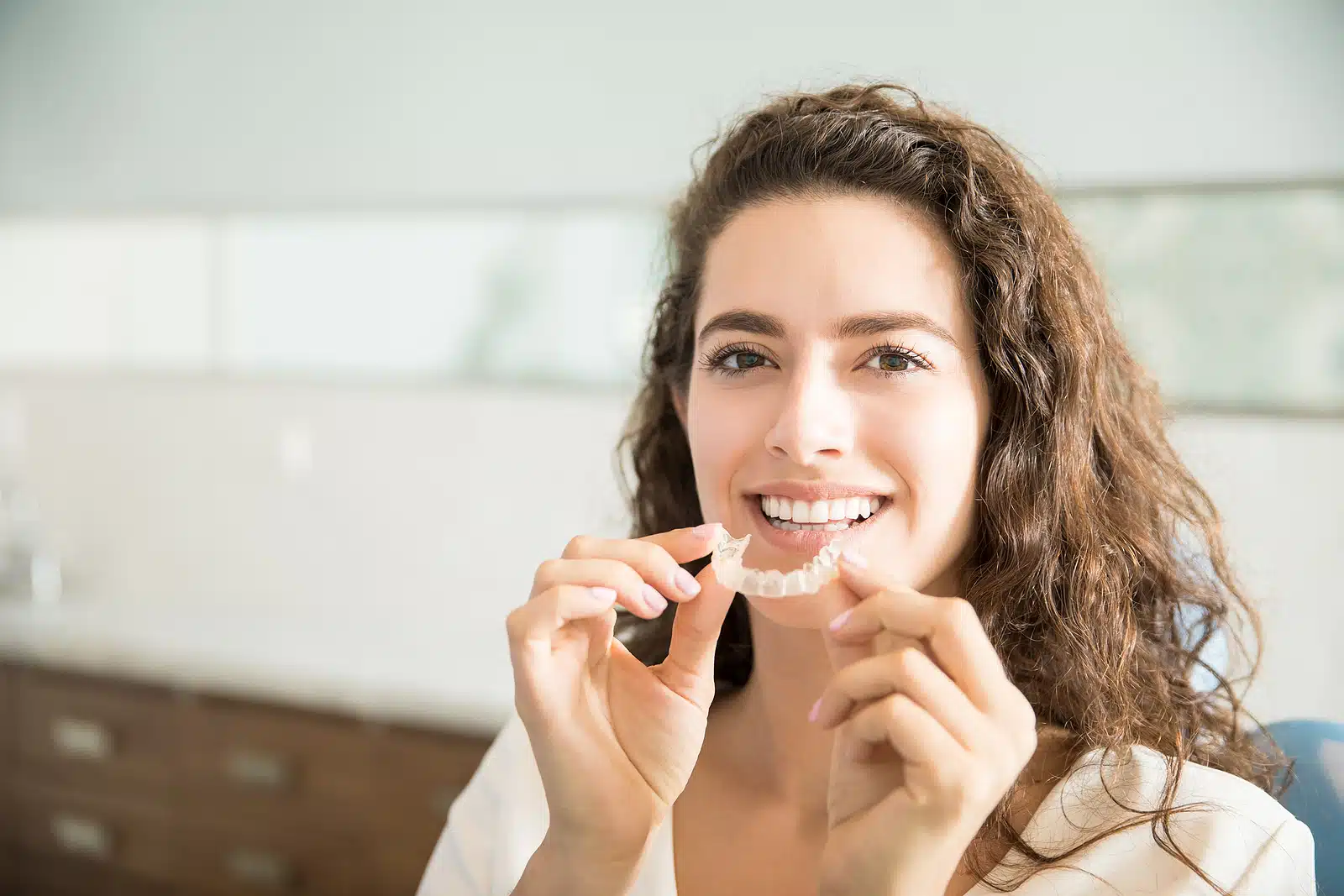
Quick answer: Plan on wearing a retainer for life. Most patients wear a removable retainer about 20 to 22 hours a day for the first 3 to 6 months after braces or Invisalign, then switch to nightly wear. Nighttime wear continues indefinitely because teeth keep trying to drift for the rest of your life.
Not sure your retainer still fits?
A retainer that feels tight or rocks on your teeth is a sign something has shifted. Choose your next step:
Retainer Wear Timeline After Braces or Invisalign
| Stage | How long it lasts | Removable retainer schedule | Why it matters |
|---|---|---|---|
| Full-time phase | About 3 to 6 months after braces come off or your last aligner | 20 to 22 hours a day; out only to eat and brush | Bone and gum fibers around the teeth are still settling into the new positions. |
| Nightly phase | At least 1 year | Every night while you sleep | Teeth are stable during the day but still pull back slowly without support. |
| Long-term maintenance | For life | Nightly, or as your orthodontist directs | Teeth shift with age, grinding and gum changes even years after treatment. |
| Bonded (fixed) retainer | Stays in until your orthodontist removes it | No schedule; it is worn 24 hours a day | Needs regular checks because a loose wire lets teeth move without warning. |
Why Retainers Are Essential After Orthodontic Treatment
 Finishing braces or Invisalign starts the retention phase, and wearing a retainer is what protects the result. When brackets come off, the bone and ligaments around your teeth haven’t fully adapted to the new positions. A retainer holds everything in place while that tissue firms up.
Without one, teeth tend to drift back toward where they started. The American Association of Orthodontists advises patients to wear retainers exactly as instructed to keep teeth from shifting after treatment, whether you finished in traditional braces or Invisalign clear aligners.
So, How Long Do You Have to Wear a Retainer?
The short version: full time at first, nightly after that, and nightly for as long as you want straight teeth. Most patients wear a removable retainer 20 to 22 hours a day for 3 to 6 months. Once your orthodontist sees that your teeth are stable, you’ll move to nights only for at least a year. After that, most orthodontists recommend you keep wearing it every night for life.
Your exact schedule depends on how much your teeth moved, your age and the type of retainer you have. Follow the plan your orthodontist gives you at your debond or final aligner visit.
What About Fixed vs. Removable Retainers?
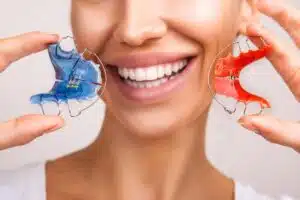
A bonded retainer is a thin wire cemented behind your front teeth, so it works around the clock and can’t be forgotten. Removable retainers, either clear plastic or Hawley wire-and-acrylic styles, come out for meals and cleaning. The timeline above applies to removable styles; a fixed wire simply stays in. Our guide to the different kinds of retainers compares each option, and our post on choosing the best retainer after braces covers who each style suits.
Will I Really Have to Wear a Retainer Forever?
For most people, yes, at least at night. Teeth keep shifting slowly throughout life because of normal aging, chewing forces, grinding and changes in your gums. That isn’t a sign your treatment failed. It’s how teeth behave. Nightly wear takes less than a minute to put in and is far cheaper than retreatment.
Many patients find that if they skip a few nights, the retainer feels snug when they put it back in. That snug feeling is the retainer gently guiding teeth back. If it won’t seat at all, stop and call the office rather than forcing it.
What Happens If You Stop Wearing It?
 Relapse is usually gradual. Front teeth tend to crowd first, small gaps can reopen, and rotated teeth can turn back. Over months or years, the change can become large enough that a retainer no longer fits and you need new aligners or braces to correct it. Our post on whether a retainer can shift teeth back explains what’s possible once teeth have moved.
Tips for Making Retainer Wear Easy
- Put your retainer in as part of your bedtime routine, right after brushing.
- Keep it in its case whenever it’s out of your mouth. Napkins and lunch trays are where most retainers get lost.
- Rinse it after each use and clean it daily with a soft brush and cool water. Hot water can warp clear plastic.
- Keep a backup set if your orthodontist offers one.
- Call promptly if your retainer cracks, warps or goes missing; teeth can start moving within days.
Our optional Retainer Protection Program covers replacements for 10 years for a $695 enrollment fee. Enrolled patients pay $50 per clear retainer replacement, compared with roughly $800 for two lost or broken sets without coverage.
Teens vs. Adults: Does Age Change the Rules?
Teens are still growing, so their jaws and teeth can keep changing for several years after braces. They usually need longer full-time wear and more consistent follow-up. Adults aren’t exempt, though. Teeth shift with age, and adults who skip their retainer can see crowding return just like teens. If you finished treatment as an adult, see what to expect with orthodontics for adults.
What If It’s Been a While Since You Wore Yours?
Try it on gently. If it seats with mild pressure, wear it full time for a few days and the snugness should ease. If it won’t seat, hurts, or rocks on your teeth, don’t force it. Forcing an ill-fitting retainer can damage it or stress your teeth. Book a check so we can see whether the retainer can be adjusted, replaced, or whether short treatment is the better fix.
Final Thoughts
 Retainers are the cheapest insurance you’ll ever buy for your smile. Full time for a few months, nightly for a year, and nightly for life after that keeps your teeth where your treatment put them.
Dr. Kenneth Diminick, DDS
Dr. Diminick earned his DDS and his graduate orthodontic degree at Temple University and is a Diplomate of the American Board of Orthodontics. He is a member of the American Association of Orthodontists and the American Dental Association and has practiced orthodontics in central Pennsylvania since 1987.
Frequently Asked Questions
Do you have to wear retainers forever after braces?
Most orthodontists recommend wearing a retainer at night for life after braces. Teeth keep drifting slowly as you age, and nightly wear is what stops crowding and gaps from coming back. Your orthodontist will tell you if your case allows a lighter schedule.
Do I have to wear my retainer every night?
Yes, once you finish the full-time phase, nightly wear is the standard for removable retainers. Skipping a night now and then usually just makes the retainer feel snug, but regular skipping lets teeth shift. Wear it every night while you sleep to keep results stable.
Do you wear a retainer all day or just at night?
Both, at different stages. For about the first 3 to 6 months after treatment you wear a removable retainer 20 to 22 hours a day. After that, most patients switch to wearing it only at night.
When can I stop wearing my retainer at night?
For most patients, there isn’t a point where nighttime wear can safely stop for good. Some people can reduce to a few nights a week after several stable years, but only if their orthodontist confirms their teeth hold position. Stopping completely is the most common reason teeth shift back.
Is wearing a retainer only at night enough?
Yes, after the full-time phase is over. Nightly wear gives your teeth enough support to stay in place for most patients. If your retainer starts feeling tight every morning, ask your orthodontist whether you need more wear time.
Keep Your Smile on Track
If your retainer feels tight, cracked or lost, our team can check the fit and replace it. Visit us at our Harrisburg office on Linglestown Road, our Camp Hill office on Trindle Road or our Carlisle office on Noble Boulevard.


OFFICE HOURS
HARRISBURG AND CAMP HILL
MON-TUE: 8:00 AM – 5:00 PM
WED-THU: 7:30 AM to 4:00 PM
FRI-SUN: CLOSED
CARLISLE
MON-TUE: 7:30 AM – 4:30 PM
WED: 7:30 AM to 4:00 PM
FRI: 8:00 AM – 1:00 PM
THU,SAT,SUN: CLOSED


Areas Served
© Copyright 2026 – Hilton • Diminick Orthodontics. Orthodontic Marketing & Website Design by Ortho Marketing . Accessibility
 Camp Hill, PA
 Camp Hill, PA