

Content reviewed by Dr. Edward Hilton, board certified orthodontist and ABO diplomate at Hilton Diminick Orthodontics in Camp Hill, PA.
So which retainer is best after braces? The honest answer is the one you will actually wear. Clear retainers look nearly invisible, Hawley retainers last the longest, and permanent retainers work without you thinking about them. Your orthodontist matches the right one to your teeth, your habits, and your age.
Here in Central Pennsylvania, the doctors at Hilton Diminick Orthodontics fit all three types every week for patients across Lisburn, Camp Hill, Mechanicsburg, Harrisburg, and Carlisle. This guide breaks down how each retainer works, what it costs, and how to care for it.
Key takeaways
- There is no single best retainer. The best one is the one you actually wear.
- Clear (Essix) retainers are nearly invisible and comfortable, but they wear out faster.
- Hawley retainers are the tough, adjustable classic that can last for years.
- Permanent retainers are bonded behind your teeth, so there is nothing to forget, but flossing takes more effort.
- Teeth try to drift for the rest of your life, and skipping your retainer is the most common reason they shift back.
- Ready to protect your smile? Request an appointment or call 1.833.321.STR8 (7878).
Why do you need a retainer after braces?
Braces move your teeth. A retainer keeps them there.
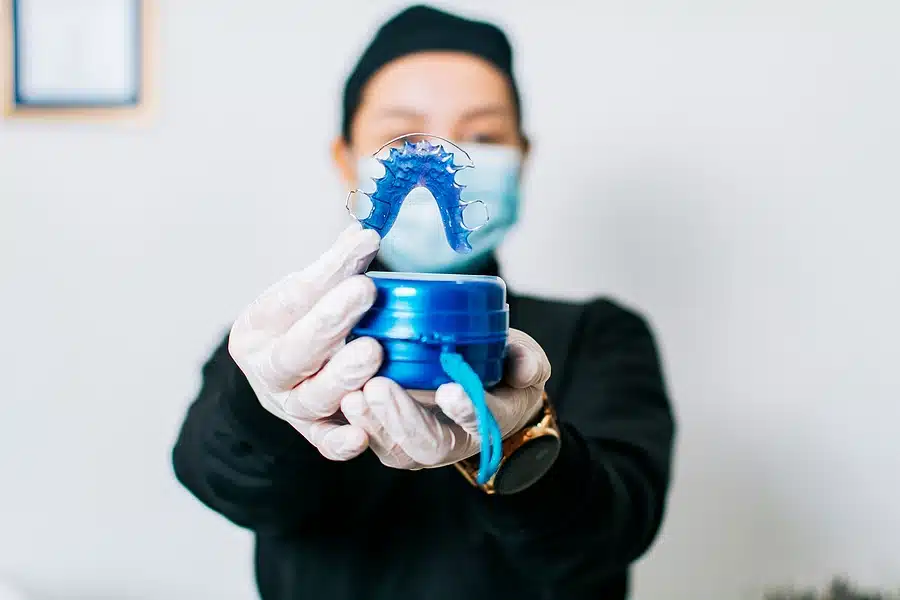
After your braces come off, the bone and gums around your teeth are still settling. They need months to firm up around the new position. Without a retainer, teeth start sliding back within weeks. The American Association of Orthodontists treats retention as a lifelong part of orthodontic care, not an optional add on.
A large Cochrane review of retention studies reached the same conclusion: teeth tend to relapse toward their old positions after braces. The ADA’s MouthHealthy guide says the same in plainer terms, that retainers preserve and stabilize your results.
What are the 3 types of retainers?
All three do the same core job of holding teeth in place. The choice comes down to how they fit your daily life.
1. Clear retainers (Essix)
A clear retainer is a thin, see through tray molded to your teeth, much like an Invisalign aligner.
- Best for: teens and adults who want an invisible option
- Watch out for: heat, since hot water can warp the plastic, and grinding, which wears the tray down
- Most need replacing every 1 to 3 years
2. Hawley retainers
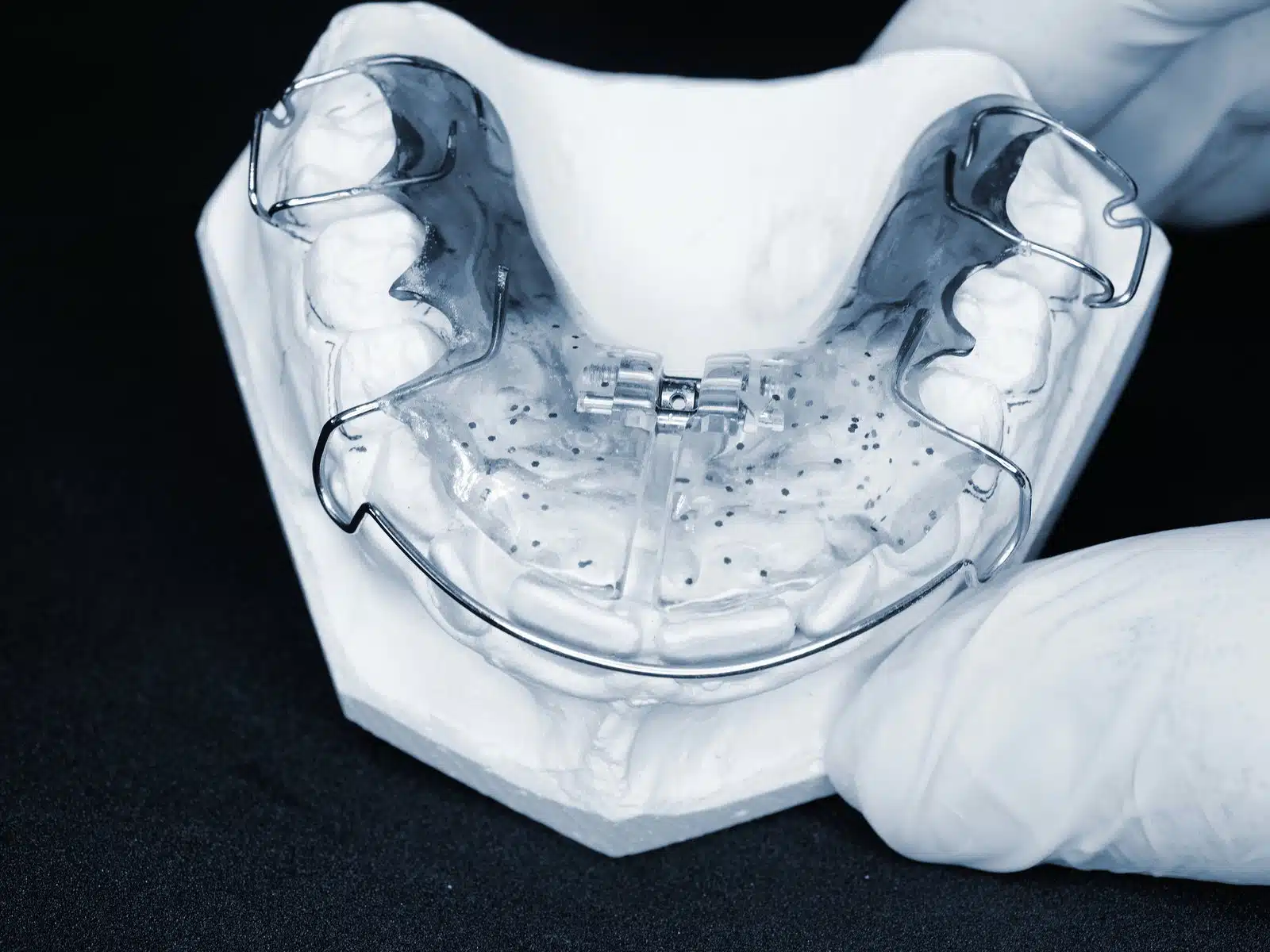
The Hawley is the classic removable retainer: a wire that crosses the front teeth, attached to an acrylic plate. It is sturdy, and your orthodontist can adjust it to nudge small shifts back into line.
- Best for: growing kids and anyone who wants one retainer that holds up for years
- Watch out for: the visible front wire and a brief adjustment period for speech
3. Permanent (bonded) retainers
A permanent retainer is a thin wire bonded to the back of your front teeth, usually the lower ones. You cannot see it, and you cannot forget it.
- Best for: lower front teeth, which shift the most, and for anyone who knows they would misplace a removable retainer
- Watch out for: flossing takes more effort, and the wire needs a periodic check
As the Cleveland Clinic explains, removable retainers like the Hawley and Essix cover the same ground in different materials, while a bonded wire stays put around the clock. None is medically better than the others. They simply suit different people.
Which retainer is best after braces? Side by side
|
Feature |
Clear (Essix) |
Hawley |
Permanent |
|---|---|---|---|
|
Visibility |
Nearly invisible |
Wire shows in front |
Hidden behind teeth |
|
Removable? |
Yes |
Yes |
No |
|
Durability |
1 to 3 years |
5 to 10 plus years |
3 to 10 plus years |
|
Comfort |
High |
Takes a few days |
High once you adjust |
|
Cleaning |
Easy, rinse and brush |
Easy, brush the plate |
Harder, floss threaders help |
|
Can it be adjusted? |
No, remade instead |
Yes |
Limited |
|
Easy to lose? |
Yes, keep the case |
Yes |
No |
|
Relies on memory? |
Yes |
Yes |
No |
The differences come down to lifestyle, not results. A patient who travels and eats out a lot may lean toward a bonded lower wire so nothing goes missing on a lunch tray, while a patient who grinds at night may prefer a durable Hawley. Your orthodontist reads your case and your habits, then recommends the fit.
How much does a retainer cost after braces?
For most patients, the first set of retainers is included in the total braces fee, so there is no separate bill the day your braces come off. Replacement sets do carry a cost that varies by type, by how many arches you need, and by your practice. A few things move the number up or down:
- The type you choose. A bonded wire and a molded clear tray are priced differently.
- Upper, lower, or both. Two arches cost more than one.
- Replacements over time. Clear trays are replaced more often than a Hawley or a bonded wire.
- Insurance and payment plans. Some orthodontic benefits contribute toward retainers.
Rather than quote a range over the phone, our team walks you through retainer and replacement pricing at your visit and reviews financing so the plan fits your budget. Ask about payment options when you request an appointment or call 1.833.321.STR8 (7878).
How do you get a retainer? (4 simple steps)
- Braces come off. Your orthodontist checks your bite one last time and confirms your teeth are ready for retention.
- Digital scan. At HD Ortho, a quick digital scan replaces goopy impressions.
- Fitting. Clear and Hawley retainers are made from your scan and fitted within days. A permanent retainer is bonded in the same visit or soon after.
- Wear plan. You leave with a schedule and care instructions, usually full time at first, then nights only as the bite stabilizes.
How long do you wear a retainer?
Plan on some form of retainer for life. According to Healthline, the typical guideline is to wear a removable retainer full time, except for meals and cleaning, for roughly the first 4 to 6 months. After that, most patients move to wearing it at night indefinitely, because teeth can drift at any age.
How do you care for each retainer?
Good care keeps a retainer clean and working. The routine differs a little by type.
|
Retainer |
Daily care |
Keep in mind |
|---|---|---|
|
Clear (Essix) |
Rinse in cool water and brush gently, store in its case |
Never use hot water, and keep it away from pets and napkins |
|
Hawley |
Brush the acrylic plate and wire, soak as directed |
Handle by the plate, not the wire, to avoid bending it |
|
Permanent |
Floss under the wire daily with a threader or water flosser |
Watch for tartar buildup and a loose spot, and report either one |
Whatever type you get, clean it daily and store removable retainers in a case. A cracked tray or a loose bonded wire is a reason to call, not to wait.
Is a permanent retainer right for you?
Ask yourself three questions:
- Do you tend to lose things? A bonded wire cannot be left behind at a restaurant.
- Were your lower front teeth crowded before treatment? Those teeth relapse the most.
- Will you floss around a wire every day? If yes, a permanent retainer is a strong pick.
Many HD Ortho patients choose a combo: a permanent wire on the bottom and a clear retainer at night on top. That gives set and forget protection where teeth shift most, plus an invisible backup.
Where can you get a retainer near Lisburn, PA?
If you finished braces near Lisburn, Camp Hill, Mechanicsburg, or Harrisburg, you do not have to travel far. Hilton Diminick Orthodontics has offices in Camp Hill, Harrisburg, and Carlisle.
The practice is a family team. Dr. Edward Hilton and Dr. Kenneth Diminick are board certified orthodontists who have practiced in Central PA since the 1980s, and today their daughter and son, Dr. Katherine Hilton and Dr. Joseph Diminick, work alongside them with Dr. Melissa Seidel. Harrisburg Magazine has voted the practice Best Orthodontist in Harrisburg ten years running. Meet the full team on the doctors page.
In reviews, patients tend to mention two things: the team takes real time to explain treatment, and families keep coming back across the years. That matters for retention, because a wear plan only works when you understand the reason behind it.
Still wearing traditional braces now? It is smart to talk retainers before they come off, so your plan is ready on day one.
Office and contact
- Camp Hill: 3412 E Trindle Rd, Camp Hill, PA 17011
- Harrisburg: 3925 Linglestown Rd, Harrisburg, PA 17110
- Carlisle: 10 Noble Blvd Suite 2B, Carlisle, PA 17013
- Phone (all locations): 1.833.321.STR8 (7878)
- Book online: hdortho.com/schedule-an-appointment
Frequently Asked Questions
Which retainer is best after braces?
The one you will wear every time. Clear retainers win on looks, Hawleys on toughness, and permanent retainers on convenience, and many patients combine a bonded lower wire with a clear upper tray.
How long do I have to wear a retainer after braces?
Plan on retainers for life. Most patients wear one full time for roughly 4 to 6 months, then switch to nights only. Because teeth can drift at any age, night wear never fully ends.
How much does a retainer cost?
It varies by type, by how many arches you need, and by practice. A first set is often included in your braces fee, and our team reviews replacement pricing and payment options before you decide.
Can a retainer move my teeth back if they shifted?
Only slightly. A Hawley can be adjusted for very small shifts, but bigger ones usually need a short round of new treatment. Call your orthodontist as soon as a retainer feels tight.
How long do permanent retainers last?
Often many years, and some last a decade or more. The wire or bonding can break, so have it checked at your dental visits and call if it feels loose.
Can I wear my retainer only at night?
Eventually, yes. Most patients move to night only wear after the first few months. Follow your orthodontist’s timeline, because switching too soon lets teeth drift.
Does a permanent retainer make flossing harder?
It takes a little more effort. A floss threader or a water flosser lets you clean under the wire in seconds once you get the hang of it. Daily cleaning keeps tartar from building up around the bond.
What happens if I stop wearing my retainer?
Your teeth can drift back toward their old positions, sometimes within weeks. Contact your orthodontist early, since catching it fast may mean a simple fix instead of repeat treatment.
How do I clean my retainer?
Rinse and gently brush a clear or Hawley retainer daily, and store it in its case when it is out. Floss under a bonded wire every day. Avoid hot water on clear trays, since heat warps the plastic.
Ready to protect your new smile?
Your braces did the hard work. The right retainer keeps it that way. If you live near Lisburn, Camp Hill, Harrisburg, or Carlisle, the Hilton Diminick Orthodontics team will help you pick the retainer that fits your life and your budget.
Call 1.833.321.STR8 (7878) or request an appointment online today.


OFFICE HOURS
HARRISBURG AND CAMP HILL
MON-TUE: 8:00 AM – 5:00 PM
WED-THU: 7:30 AM to 4:00 PM
FRI-SUN: CLOSED
CARLISLE
MON-TUE: 7:30 AM – 4:30 PM
WED: 7:30 AM to 4:00 PM
FRI: 8:00 AM – 1:00 PM
THU,SAT,SUN: CLOSED


Areas Served
© Copyright 2026 – Hilton • Diminick Orthodontics. Orthodontic Marketing & Website Design by Ortho Marketing . Accessibility
 Camp Hill, PA
  Camp Hill, PA