


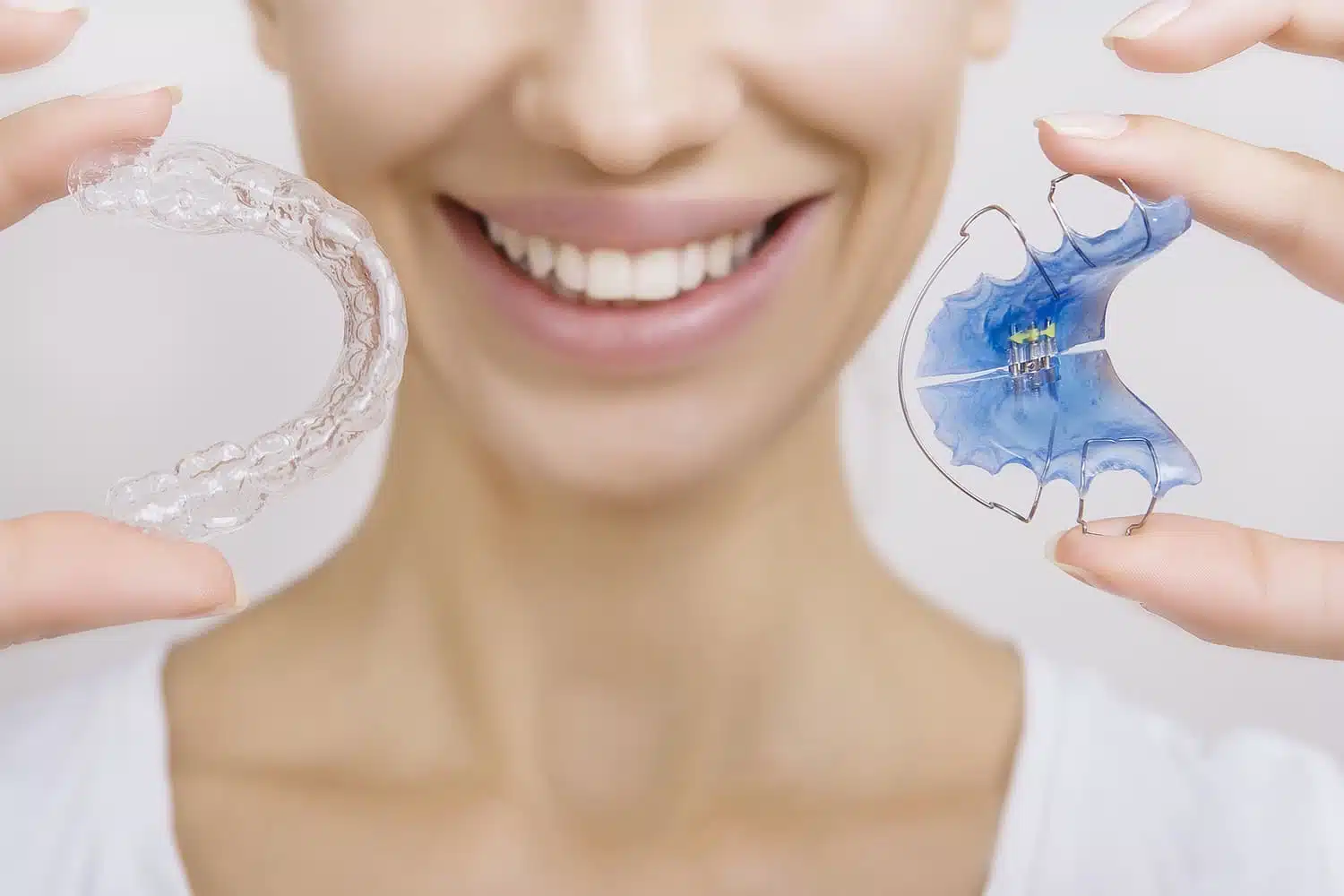
Quick answer: A retainer can move teeth back only if they have shifted slightly, usually after days or a few weeks without wear. If the retainer still seats with gentle pressure, wearing it full time often guides teeth back. After months or years, teeth usually move too far, and new aligners or braces are needed.
Teeth already shifted and your retainer feels tight?
Don’t force it. A quick fit check tells you whether your retainer can still do the job. Pick your next step:
Can Your Retainer Fix It? Time Out of Retainer vs. Next Step
| Time without your retainer | What you’ll usually notice | Can the retainer move teeth back? | What to do |
|---|---|---|---|
| A few days to 2 weeks | Retainer feels snug or tight when you put it in | Often yes, if it seats fully | Wear it full time for several days until it feels comfortable, then return to nightly wear. |
| 2 to 6 months | Retainer feels very tight, seats only partway, or front teeth look slightly crowded | Sometimes, for small movements | Don’t force it. Book a fit check so your orthodontist can decide whether to keep wearing it or make a new one. |
| 6 months to 2 years | Retainer may not fit at all; gaps or crowding are visible | Rarely | Plan on a new retainer at minimum, or a short course of aligners. |
| More than 2 years | Old retainer no longer fits; relapse is obvious | No | Expect an exam, a digital scan and limited retreatment with aligners or braces, then a new retainer. |
Every mouth is different. These ranges are general guidance; your orthodontist decides what’s safe after seeing your fit.
Can Retainers Shift Teeth Back: How Retainers Work
A retainer is built to hold teeth in their final positions after braces or Invisalign, not to move them. Clear retainers are molded to your finished smile, so if a tooth drifts a little, the plastic presses it back toward that position. That’s why a retainer can correct small shifts but not large ones. Learn more about the retainer types we offer, including clear, Hawley and bonded wire retainers.
Hawley retainers can sometimes be adjusted by your orthodontist to nudge a single tooth. Bonded retainers don’t move teeth at all; if the wire breaks or comes loose, the teeth it was holding can shift.
Do Retainers Shift Teeth Back Naturally?
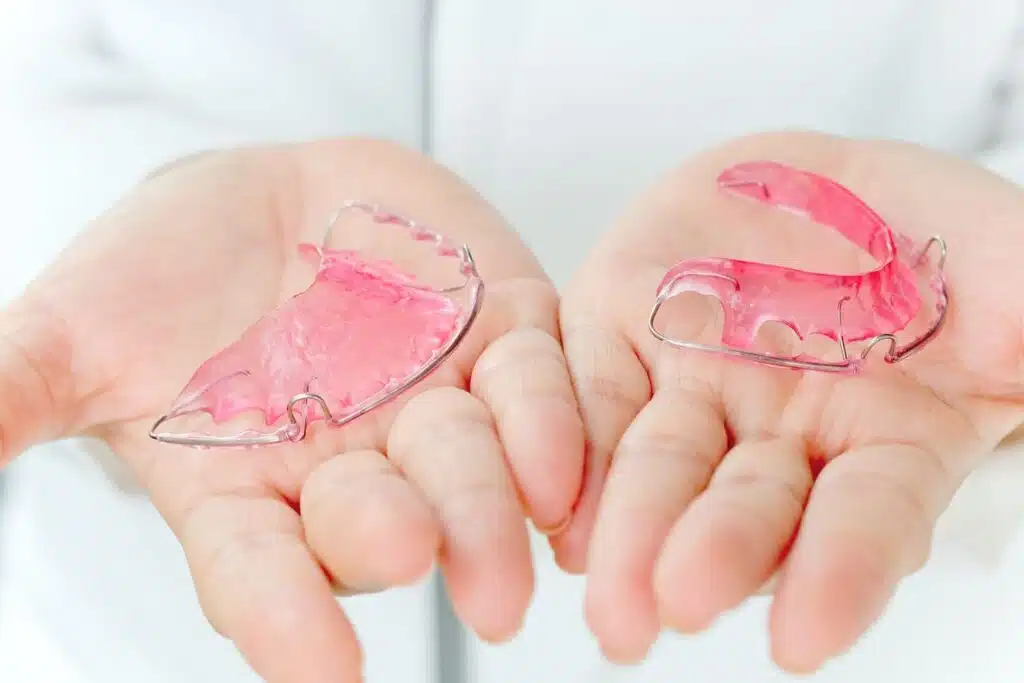 Only within limits. When teeth have moved a fraction of a millimeter, a well-fitting clear retainer applies light, steady pressure much like a single aligner does. Once teeth move farther than the retainer can flex, it either won’t seat or it pushes on the wrong spots. At that point it can’t guide teeth back and may crack.
When Teeth Shifting Becomes Noticeable
Lower front teeth usually show crowding first. You might also notice a small gap reopening, a rotated tooth turning back, or floss catching where it didn’t before. Common causes include skipped retainer wear, a broken bonded wire, teeth grinding, gum recession and normal aging.
What to Do If Teeth Have Shifted Too Much
If your old retainer won’t fit, the fix is usually short and targeted. Many relapse cases are corrected with a limited round of clear aligners, then a new retainer to hold the result. Our guide to fixing crowding with Invisalign shows how that works. Adults who are returning after years away can read about adult orthodontic treatment.
Importance of Wearing Your Retainer Regularly
The easiest way to avoid this whole question is consistent nightly wear. Most patients wear a removable retainer full time for the first few months after treatment, then every night for life. Our post on how long you need to wear a retainer explains each stage of the schedule.
Can Retainers Be Used Like Invisalign?
Not really. Invisalign uses a series of aligners, each shaped to move teeth a small, planned step. A retainer is a single tray shaped to your finished position. It can handle tiny corrections, but it can’t replace a planned sequence of aligners. Wearing an old retainer to force big movements can damage the retainer and stress the gums and roots.
Signs You May Need a New Retainer
- It won’t seat fully or rocks when you bite down.
- It has cracks, warping or cloudy wear spots.
- It causes sore spots that don’t ease after a day or two.
- Your bonded wire feels loose or a tooth moves separately from its neighbors.
- It’s older than its expected life; removable retainers often last about 1 to 3 years.
Our optional Retainer Protection Program costs $695 for 10 years, and enrolled patients pay $50 for each clear retainer replacement.
Preventing Future Shifting
Wear your retainer every night, keep it in its case when it’s out, and clean it daily with cool water. If you grind your teeth, mention it at your next visit. Call right away if your retainer breaks or goes missing, since teeth can begin moving within days. Our comparison of the different kinds of retainers can help you choose a replacement that suits your habits.
How Our Orthodontic Team Can Help
At a fit check, we look at how your retainer seats, scan or photograph your teeth, and tell you whether to keep wearing it, replace it or plan a short course of treatment. Our orthodontists include Diplomates of the American Board of Orthodontics, and Dr. Edward Hilton has practiced orthodontics in central Pennsylvania since 1985.
Dr. Kenneth Diminick, DDS
Dr. Diminick earned his DDS and his graduate orthodontic degree at Temple University and is a Diplomate of the American Board of Orthodontics. He is a member of the American Association of Orthodontists and the American Dental Association and has practiced orthodontics in central Pennsylvania since 1987.
Frequently Asked Questions
Can a retainer shift teeth back if I stopped wearing it for months?
Sometimes, but only if the teeth moved a small amount and the retainer still seats with gentle pressure. After several months, many retainers no longer fit well enough to guide teeth back. An orthodontist should check the fit before you keep wearing it.
How long does it take for a retainer to move teeth back?
For minor shifting after a short break, a clear retainer worn full time usually feels comfortable again within a few days to a couple of weeks. If it still feels very tight after that, the movement is likely too large for the retainer to correct. Book a fit check rather than waiting longer.
Can I wear my old retainer to move my shifted teeth back?
Only if it still fits. An old retainer that seats fully can correct slight shifting with consistent wear. One that won’t seat or causes pain should not be forced, because it can crack and put strain on your teeth and gums.
Is it safe to force in a tight retainer?
No. Mild snugness is normal after missed nights, but pressing hard to snap a retainer into place can crack it or stress the roots and gums. If it doesn’t seat with light finger pressure, call your orthodontist.
What happens if teeth move too much?
When shifting goes beyond what a retainer can handle, a short round of clear aligners or limited braces is usually the fix. Afterward you’ll get a new retainer made to the corrected position. Many relapse cases take far less time than the original treatment.
What areas does Hilton Diminick Orthodontics serve?
We have offices in Harrisburg, Camp Hill and Carlisle, Pennsylvania. Patients also come from Mechanicsburg, Hershey, Hummelstown, Middletown, Boiling Springs and nearby towns.
Schedule a Consultation
If your retainer feels tight or your teeth look different, we can check it at any of our three offices. Visit our Harrisburg orthodontist office on Linglestown Road, our Camp Hill office on Trindle Road or our orthodontist in Carlisle on Noble Boulevard.


OFFICE HOURS
HARRISBURG AND CAMP HILL
MON-TUE: 8:00 AM – 5:00 PM
WED-THU: 7:30 AM to 4:00 PM
FRI-SUN: CLOSED
CARLISLE
MON-TUE: 7:30 AM – 4:30 PM
WED: 7:30 AM to 4:00 PM
FRI: 8:00 AM – 1:00 PM
THU,SAT,SUN: CLOSED


Areas Served
© Copyright 2026 – Hilton • Diminick Orthodontics. Orthodontic Marketing & Website Design by Ortho Marketing . Accessibility
 Camp Hill, PA
 Camp Hill, PA