

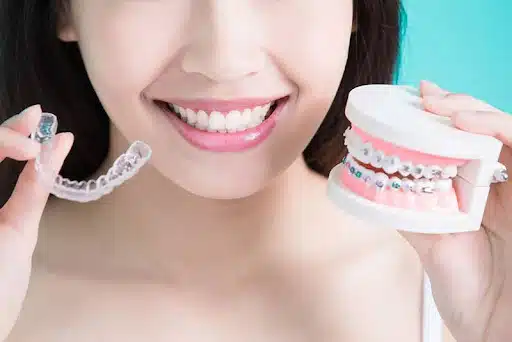
Traditional metal braces usually work the fastest, especially for complex orthodontic problems. Among the different types of mouth braces, they allow orthodontists to apply precise pressure to the teeth, which helps guide tooth movement more efficiently. However, the fastest option still depends on your specific orthodontic needs. For mild alignment issues, clear aligners or ceramic braces may achieve results in a similar timeframe when patients follow their treatment plan carefully.
Orthodontic treatment has advanced significantly in recent years. Today, patients have several options for straightening teeth and improving their smiles, including traditional braces, ceramic braces, lingual braces, and clear aligners.
While mouth braces types can influence treatment speed, other factors also play a major role. The severity of tooth misalignment, jaw development, patient age, and how consistently patients follow their orthodontist’s instructions can all affect how quickly teeth move.
Understanding the different orthodontic treatments available today can help patients choose the option that works best for their smile.
What Are Mouth Braces?
Braces are orthodontic appliances used to gradually move teeth into healthier, more aligned positions. They are designed to correct issues such as crooked teeth, crowding, gaps, overbites, and underbites.
Most types of braces for teeth use a combination of small brackets and wires that work together to apply gentle pressure to the teeth. Over time, this pressure encourages the teeth to shift into their proper positions.
Orthodontic braces work through several key components:
- Brackets: Small attachments placed on each tooth
- Archwires: Thin wires connecting the brackets that guide tooth movement
- Elastic bands: Small rubber bands that help adjust bite alignment
- Regular adjustments: Orthodontists periodically tighten or adjust braces to continue tooth movement
Each treatment plan is customized based on the patient’s dental structure and orthodontic needs. With consistent care and regular visits, braces gradually create a healthier bite and a more confident smile.
Different Types of Mouth Braces
Orthodontists offer several treatment options today, each with its own advantages. Understanding the various types of bracesavailable can help patients choose the treatment that best fits their lifestyle and orthodontic goals.
Traditional Metal Braces
Traditional metal braces are the most well-known orthodontic treatment and have been used successfully for decades.
These braces use stainless steel brackets attached to the front of the teeth and connected by a metal wire. Orthodontists adjust the wire periodically to guide teeth into alignment.
Key benefits include:
- Extremely effective for complex orthodontic issues
- Reliable and predictable tooth movement
- Often the fastest option for complicated cases
- Durable and cost-effective
Although they are the most visible orthodontic option, modern metal braces are smaller, more comfortable, and more efficient than earlier designs.
Ceramic Braces
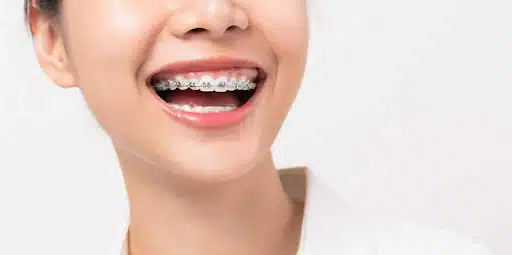
Ceramic braces function similarly to traditional metal braces but use tooth-colored or clear brackets that blend in with natural teeth.
Among the kinds of mouth braces available today, ceramic braces are popular with teens and adults who want a less noticeable orthodontic treatment.
Benefits of ceramic braces include:
- More discreet appearance
- Effective for many orthodontic conditions
- Similar treatment approach to metal braces
However, ceramic brackets can sometimes be slightly more delicate than metal ones and may require extra care during treatment.
Lingual Braces
Lingual braces offer another discreet orthodontic option. Instead of being attached to the front of the teeth, lingual braces are placed on the inside surface of the teeth facing the tongue.
Because they are hidden from view, they are virtually invisible when you smile.
Advantages include:
- Completely hidden orthodontic treatment
- Effective for many alignment problems
- Customized for each patient’s teeth
However, lingual braces can take some time to get used to, and they may require specialized orthodontic expertise for placement and adjustments.
Clear Aligners
Clear aligners have become one of the most popular orthodontic treatments for both adults and teens.
These systems use a series of removable, transparent trays that gradually move teeth into alignment. Each set of aligners is worn for a specific period before switching to the next stage of treatment.
Clear aligners offer several benefits:
- Nearly invisible appearance
- Removable for eating and brushing
- Smooth, comfortable design
- Convenient for many patients
While clear aligners are highly effective for mild to moderate orthodontic issues, more complex cases may still require braces.
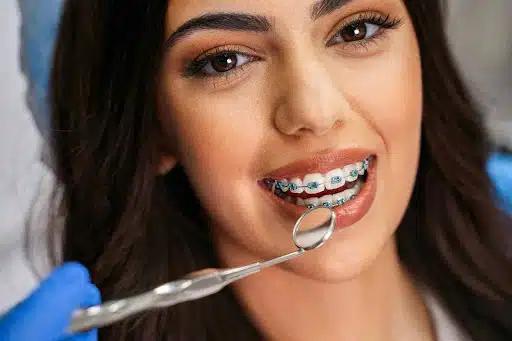
Which Types of Braces for the Mouth Work the Fastest?
The truth is that there is no universal answer to which braces work the fastest. The speed of orthodontic treatment depends on several important factors.
These include:
- The severity of tooth misalignment
- Jaw development and bite issues
- Patient age and bone structure
- Consistency in wearing orthodontic appliances
- The technology used by the orthodontist
In many cases, among the different types of mouth braces, traditional metal braces may provide faster results for complex orthodontic problems because they allow orthodontists to apply very precise forces to the teeth.
However, for mild alignment issues, clear aligners may produce results in a similar timeframe when patients follow their treatment plan carefully.
The most effective orthodontic solution is always the one tailored specifically to your smile.
Comparison Table: Braces Treatment Options
| Braces Type | Visibility | Comfort | Typical Treatment Speed | Average Cost (US) | Best For |
|---|---|---|---|---|---|
| Metal Braces | Most visible | Moderate | Often fastest for complex cases | $3,000 – $7,000 | Severe alignment or bite issues |
| Ceramic Braces | Less visible | Moderate | Similar to metal braces | $4,000 – $8,000 | Patients seeking discreet braces |
| Lingual Braces | Hidden | Moderate to low initially | Similar to metal braces | $8,000 – $10,000+ | Adults wanting invisible treatment |
| Clear Aligners | Nearly invisible | High comfort | Best for mild to moderate cases | $3,000 – $8,000 | Teens and adults wanting removable treatment |
Each of the different types of mouth braces offers unique advantages. While metal braces are often the most powerful tool for complex orthodontic corrections, newer treatments like aligners provide flexibility and convenience for many patients.
Your orthodontist will evaluate your smile and recommend the best option based on your individual needs.
Factors That Affect How Fast Braces Work
Even after understanding the different treatment options, it is important to remember that braces types explained in orthodontics are only one part of the equation.
Several factors influence how quickly braces move teeth.
Complexity of Tooth Alignment
Patients with severe crowding, large gaps, or significant bite issues may require longer treatment time.
Jaw Development
Younger patients may experience faster results because their jaws are still developing, making tooth movement easier.
Consistent Orthodontic Visits
Regular appointments allow orthodontists to adjust braces and monitor progress, helping treatment stay on schedule.
Oral Hygiene Habits
Maintaining good oral hygiene helps prevent issues like cavities or gum inflammation that could delay treatment.
Following Orthodontist Instructions
Wearing rubber bands, aligners, or other orthodontic appliances exactly as directed is essential for staying on track.
Tips to Help Braces Work Faster
Patients can take several steps to help their orthodontic treatment progress as efficiently as possible.
- Attend all scheduled orthodontic appointments
- Maintain excellent brushing and flossing habits
- Avoid sticky or hard foods that could damage braces
- Wear rubber bands or aligners exactly as prescribed
- Follow all orthodontist recommendations
Staying consistent with these habits can help ensure your treatment moves forward smoothly.
Meet the Orthodontic Team
The orthodontic team at Hilton Diminick Orthodontics is dedicated to providing personalized treatment and advanced orthodontic care for every patient.
Doctors Hilton and Diminick received their dental degrees and graduate orthodontic training from Temple University. Both doctors are Diplomates of the American Board of Orthodontics and active members of the American Association of Orthodontists, the American Dental Association, and multiple state and local dental organizations.
They also continue to strengthen their expertise by completing an average of 30 units of continuing education each year and encouraging their staff to participate in professional development programs.
Orthodontists at the Practice
Dr. Edward Hilton
Dr. Edward Hilton brings decades of orthodontic experience and is known for providing detailed, patient-focused care.
Dr. Kenneth Diminick
Dr. Kenneth Diminick is committed to delivering high-quality orthodontic treatment and helping patients achieve confident, healthy smiles.
Dr. Joseph Diminick
Dr. Joseph Diminick is a board-certified orthodontist who completed his orthodontic residency at Seton Hill University.
Dr. Katherine Hilton
Dr. Katherine Hilton trained at the Seton Hill University Center for Orthodontics and focuses on modern orthodontic treatment techniques.
Dr. Melissa Seidel
Dr. Melissa Seidel is an orthodontist and active member of major professional organizations, including the American Association of Orthodontists.
Orthodontic Care for Pennsylvania Communities
Patients from across central Pennsylvania visit the practice for personalized orthodontic care and modern treatment options.
The practice proudly serves patients from:
- Carlisle, PA
- Camp Hill, PA
- Harrisburg, PA
Families from these communities trust the orthodontic team for guidance, advanced treatment planning, and long-term smile health.
Frequently Asked Questions
1.Which types of mouth braces work the fastest?
Traditional metal braces often move teeth the fastest in complex orthodontic cases because they provide orthodontists with precise control over tooth movement. However, treatment speed ultimately depends on the patient’s individual orthodontic needs.
2.Are clear aligners faster than traditional braces?
Clear aligners can be just as effective as braces for mild to moderate alignment issues. For more complicated cases involving significant bite problems or crowding, braces may be the more efficient treatment option.
3.How long does orthodontic treatment usually take?
Most orthodontic treatments last between 12 and 24 months. However, treatment time varies depending on the severity of the alignment issues and how consistently the patient follows orthodontic instructions.
4.Are ceramic braces as effective as metal braces?
Yes, ceramic braces work similarly to metal braces and can correct many orthodontic issues. The main difference is their appearance, as ceramic brackets blend in with natural tooth color.
5.Can adults use mouth braces for faster treatment?
Adults can absolutely benefit from orthodontic treatment. While tooth movement may be slightly slower than in younger patients, modern orthodontic techniques allow adults to achieve excellent results with braces or aligners.
Schedule Your Orthodontic Consultation
If you are considering orthodontic treatment and want to learn about the different types of mouth braces that may work best for your smile, scheduling a consultation is the first step.
The team at Hilton Diminick Orthodontics provides personalized treatment planning and advanced orthodontic solutions designed to improve both smile appearance and long-term oral health.
During your consultation, the orthodontist will evaluate your teeth, discuss your goals, and help you determine which orthodontic treatment may be the fastest and most effective solution for your smile. Contact us today to schedule your consultation and take the first step toward a healthier, more confident smile.


OFFICE HOURS
HARRISBURG AND CAMP HILL
MON-TUE: 8:00 AM – 5:00 PM
WED-THU: 7:30 AM to 4:00 PM
FRI-SUN: CLOSED
CARLISLE
MON-TUE: 7:30 AM – 4:30 PM
WED: 7:30 AM to 4:00 PM
FRI: 8:00 AM – 1:00 PM
THU,SAT,SUN: CLOSED


Areas Served
© Copyright 2026 – Hilton • Diminick Orthodontics. Orthodontic Marketing & Website Design by Ortho Marketing . Accessibility
 Camp Hill, PA
  Camp Hill, PA